
By Jen Stroh, President IPHA & Graeme Patterson, Field Day participant
(This is a summary of the full Field Day Report which will be part of the upcoming Autumn newsletter to members.)
Our generous hosts Sophie and Xavier (above) and their two children welcomed about 20 folks to the gorgeous 10-acre property ‘Yina’ on Quandamooka country (Mount Cotton – near Brisbane). Even though it was sunny and quite hot, we were able to relax under the wide eaves of the beautifully renovated Queenslander and two gazebos erected for the day.
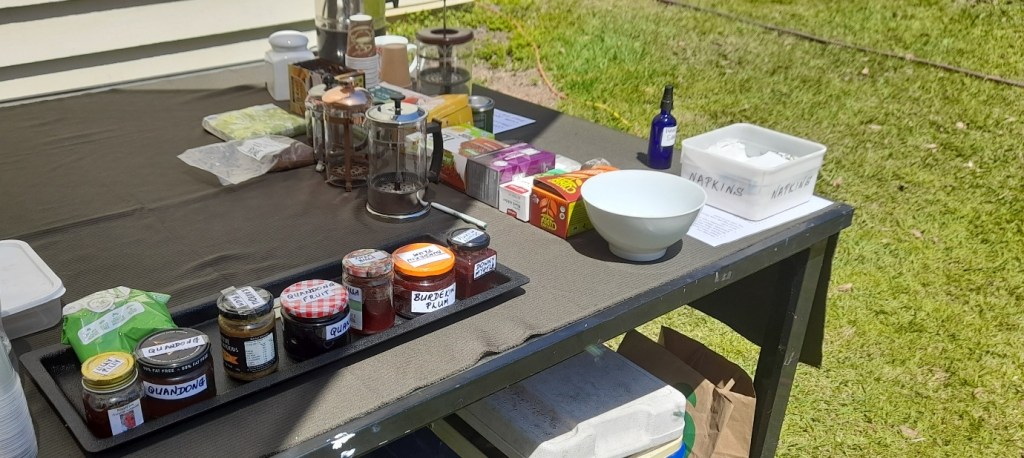
We had a range of fascinating speakers (see below for summary). Sumptuous bushfoods themed morning and arvo teas were supplied by Sheryl Backhouse from the Queensland Bushfoods Association, then more tasty food for lunch (supplied by IPHA). To balance our brains and bellies, the food was fortunately interspersed with some welcome and fascinating walks around the property.
Welcome to Country was shared by Kaylah, a local Quandamooka traditional owner. She talked about her family history in the area (including Moreton Bay, Redlands Coast and Minjerribah/‘Stradbroke Island’) and their intimate connection to Country.
Dr Don Sands: Insect Pollinators of indigenous Rutaceae Species
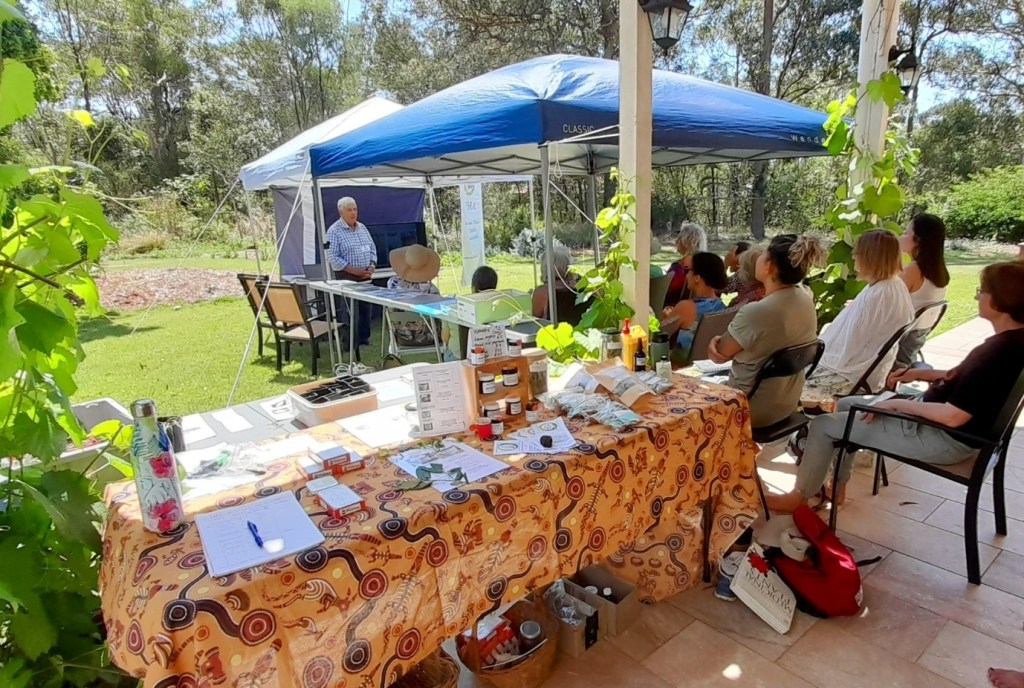
Don’s seemingly (at first) narrow focus on pollinators, revealed a far broader theme: the dangers facing our whole ecosystem when pollination relationships break down due to climate change, deforestation and urban development.
For more information see the great YouTube video 2024 by Natura Pacific “The Heliozelid Moth and Boronia Flower – a Match Made in Nature”. https://www.youtube.com/watch?v=OR0FkYAj-2Y
CSIRO results reveal alarming declines in these partnerships that can trigger accelerated extinction rates across other plant, invertebrate and higher order vertebrate species, leading to wider ecosystem depletion.
Jiale Zhang: Update on Persoonia spp. (Geebung) Research Project at Qld Uni
Jiale’s in-depth exploration of the chemical constituents of geebung (Persoonia spp.) gave a fascinating insight into the kind of thorough analysis all our indigenous edible and medicinal plants arguably deserve but rarely receive. IPHA has been privileged to help sponsor Jiale over the past 3 years to help him complete his PhD in this subject.
The IPHA founding members particular interest in this potential medicinal plant inspired them to form the IPHA 7 years ago – and to adopt Persoonia as our logo.

Useful plants like geebung have a huge list of constituents (as seen on one of Jiale’s slides).
Often, we can’t be sure which of these are therapeutically ‘active’, and which other constituents may potentiate and/or reduce effects of the active ingredients. So, while lab produced pharmaceuticals with ‘active’ ingredients isolated have the advantage of being able to ‘standardise’ dosage, their synthetic aspect may leave much to be desired.
Kerrie Oakes: PhD Study on Community Managed Herbal Medicine, SCU (Southern Cross Uni, NSW)
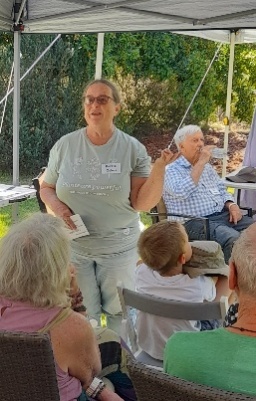
Kerrie’s outline of her current PhD study was a reminder of what growers, collectors, dispensers and users of plant medicines have known through the ages – that the level of involvement of the end user in the therapeutic process is a key determinant of health outcomes.
Kerrie (a former President of IPHA and member of Herbalists Without Borders) hopes to conduct case studies, both here and overseas, that shed light on best practice community-managed models.
Jen Stroh: Use of ‘Oxymel’ Method with Native plants
Jen’s demonstration of ‘Oxymels’ – using a mixture of honey and vinegar to prepare plant extracts – dovetailed well with Jiale’s and Kerrie’s presentations, by providing a simple, yet tried and tested method of extracting therapeutic ingredients and nutrients that anyone can do using home grown plants.
Brilliant method, great taste results and ideal for those wanting to avoid the alcohol base and the often bitter taste of many herbal medicine extracts.
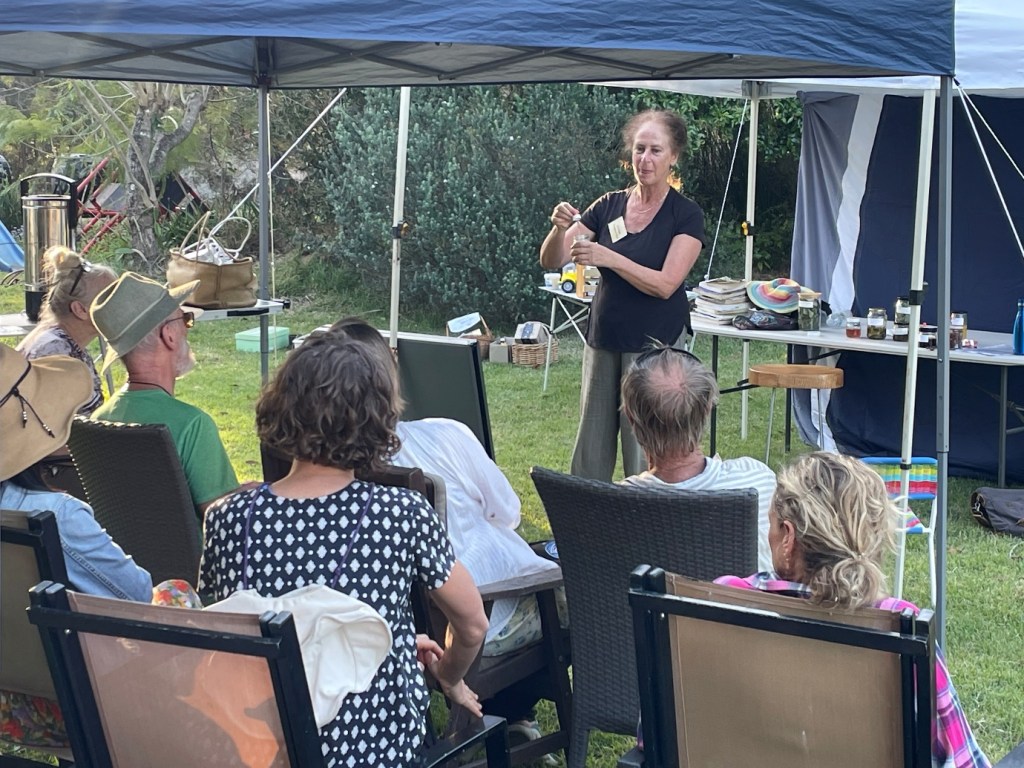
See Jen’s well researched article (with recent published PubMed studies) on this topic on her website: https://integrityhealth.com.au/medicinal-herbal-preparation-oxymels/ . This includes some garlic oxymel recipes.
Dick Copeman: Bushfoods in the City – Partnership with First Nations People
Dick shared some of his ‘lessons learnt’ over several decades as a medical practitioner working with Indigenous communities, as a bush foods enthusiast, and as co-founder of Northey Street City Farm (Brisbane).
He focussed on the potential for positive relationships and shared perspectives when First Nations and non-indigenous people work together on bush food projects.
Dick spoke about a wonderful project in which he had recently participated. This offering is available to all people as an online learning experience – Growing on Country https://www.growingoncountry.com.au
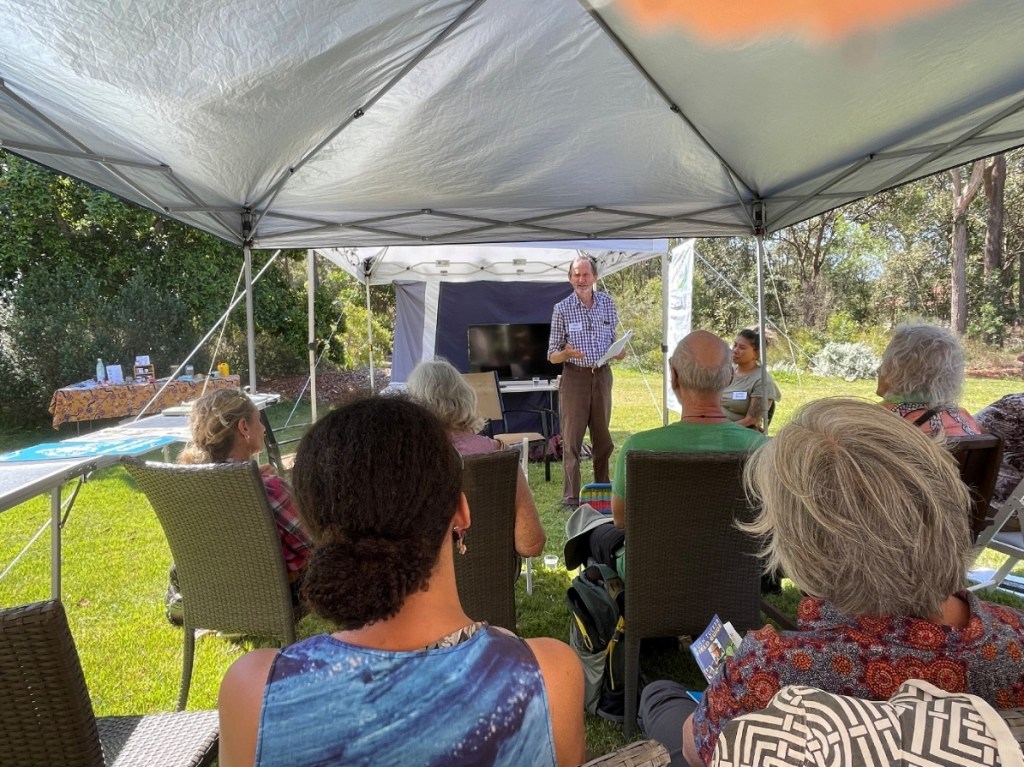
The program has been written, designed and developed by a team of Aboriginal and/or Torres Strait Islander people with contributions and feedback from Elders, knowledge holders, researchers and community members.
Tours of “Yina” property
Tours of the property tied in well with the information and ideas raised by the presenters.
Our hosts, Sophie and Xavier Ader, covered their bush regen work, making Biochar, their permaculture kitchen garden and extensive Food Forest. Also, we gained from Sophie (an IPHA Committee member) and Xavier, an insight into how and why they chose to introduce native forest regeneration and permaculture practices on “Yina”, and the positive impacts for their family and their way of life.
Andrew Pengelly (Vice President & founding member of IPHA) identified many of the (possibly 100) indigenous food and medicinal plants on Yina (including geebung), and shared some of what we know about medicinal usage of these amazing plants.
Andrew’s website is (https://herbalfield.eduction) and his published book on Constituents of Medicinal Plants (3rd Ed., CABI). Look out for his new book on edible and medicinal Australian plants coming out in a year or so.
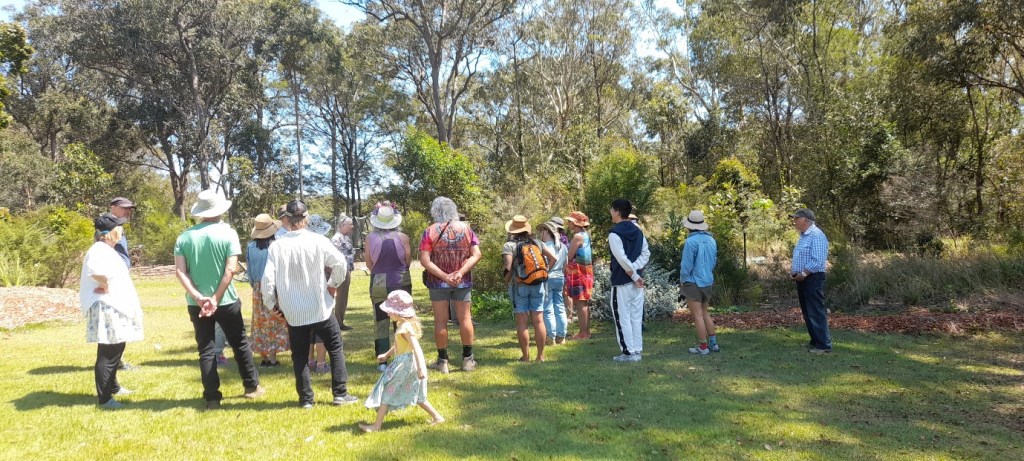
Field days are a great way to learn and network
We all enjoyed participating in and observing the networking and connection amongst people and plants that was forged in this gathering. Participants shared a wealth of knowledge and awe with each other over cups of herbal teas, coffees and macadamia cookies.
Our next field day is at Somersby, near Central Coast, Darkinjung Country, NSW on Saturday 5th April 2025.
Comments from Field Day participants
“Yet another great Field Day. I had a great time seeing how Sophie’s family have been able to incorporate native plants into a productive permaculture property. And what an honour to meet their ‘Grandmother’ tree. As always, a diverse offering of presentations and talks. Congratulations to the organisers for an informative, relaxing, and fun day. And the food, as always, highlighted indigenous foods and the skills of the team.”
-Kerrie.
“Great talks by several speakers. I learnt a lot, thanks to everyone and to IPHA for organising such a fun and educational experience.”
– Renata
 Indigenous Plants for Health, Inc.