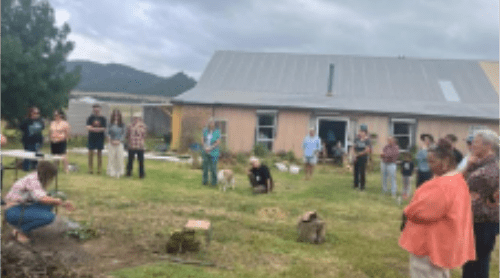
Pat Collins' report on the IPHA November field day - good food, knowledge and garden-building.
IHP BLog Posts
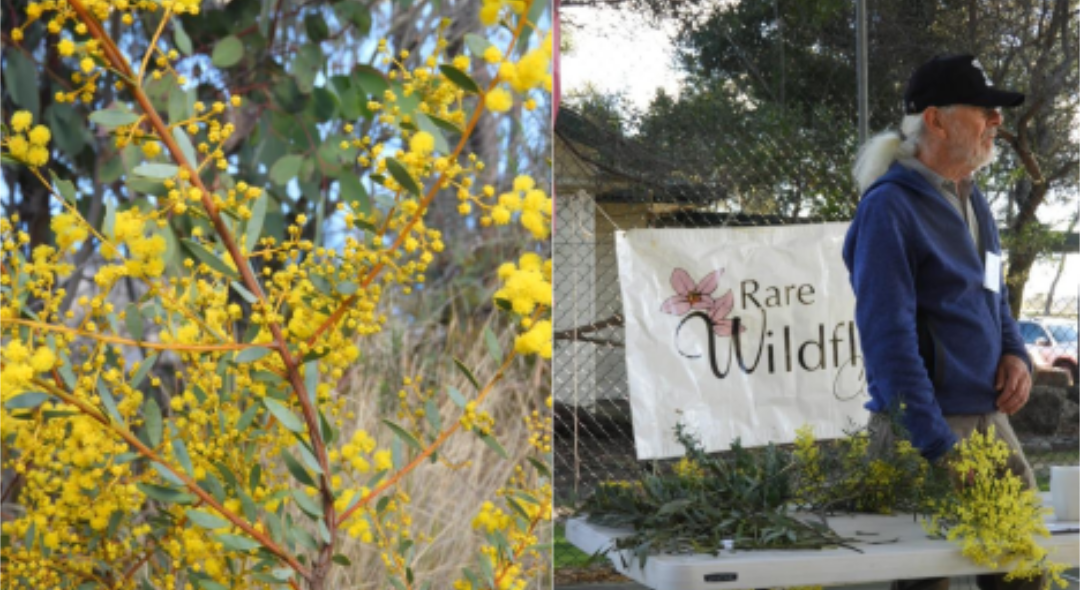
Spring 2025 Newsletter – Issue #29
iNaturalist - uses and community; Upper Hunter Field Day 22nd November 2025; Grassroots Botany for Herbalists 2nd November 2025; National Bushfoods Conference, 8th-9th November; Quiet Giants: Rough Tree Fern in Art and Story;: Yarning garden project update; Opening of new visitor’s centre, Girraween National Park; Wattle Workshop in Granite Belt

Winter 2025 Newsletter – Issue #28
Calling Bushfoodies. Australian Bushfood Conference 2025; NAIDOC Workshop, Wiradjuri Cultural Centre; Yarning garden project update; Wattle Workshop in Granite Belt; Connect with river red gum through ceramics; Pat Collins at HerbFest; Native plants winter regional gathering
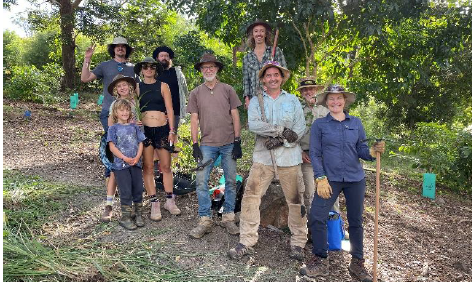
Autumn 2025 Newsletter – Issue #27
Field Day Report - Somersby NSW, April 2025; The Planting Weekend, Woodford; Yarning garden project update; Chocolate lilies; Euphorbia hirta in Art and Story; Vacancies

Late summer 2025 newsletter – Issue #26
Our next Field Day; Our new Committee Member Renata Buziak; National Symposium on Australian Traditional Medicine ;report News from Woodfordia IPHA Queensland Field Day Report; Engaging with First Nations People About Indigenous Plants; 2025 IPHA funded project update

October 2024 Field Day Highlights
Our final 2024 field day was rich in information, experience and relationship-building. Here are some highlights - the full report will be in our next newsletter

Acacia spp Part 1 – Information Sheet
Acacia is a genus of over 1,000 species native to Australia. For the profiles four species have been selected on the basis of their health-promoting properties and suitability for agroecological systems. Part 1 covers the descriptions and distribution, nutritional status and phytochemistry of the four selected species, with special focus on the nutrient profile of A. victoriae and the polyphenols and tannins in A. mearnsii, A. decurrens and A. implexa.

Acacia spp Part 2 – Information Sheet
The broad range of uses of the four Acacia species are reviewed, including the production of wattle seed for food and beverages, and the role of Australian Acacia bark in the tanning industry, notably in South Africa. Medicinal research findings include positive antimicrobial, antidiabetic and anticancer effects. Australian wattles are often cultivated in plantations, mainly in Africa and Asia, whereas they are mostly wild harvested in Australia for timber and other applications. Being nitrogen fixers they are very useful for agroforestry, however some species are liable to become invasive outside of their natural habitats, especially when cultivated outside of Australia.

Backhousia citriodora – Information Sheet
Lemon myrtle is an evergreen tree native to eastern Queensland. The fragrant lemon-scented leaves are rich in essential oils composed mainly of the terpene aldehyde, citral. Both the essential oil and phenolic compounds extracted from the leaves are potent antimicrobials and antioxidants. Lemon myrtle is widely used in aromatherapy and body care products and is in demand as a food flavour and beverage. Whilst easy to cultivate at home or in plantations, it has become susceptible to the introduced pathogen myrtle rust, which significantly impacts the yield and productivity in plantations.

Spring 2024 Newsletter – Issue #25
September newsletter highlights, including resources on The Heliozelid Moth and Boronia Flower; and how bunya and black bean tress were "waled" across country
 Indigenous Plants for Health, Inc.